Guide
Laxatives vs Supplements: Where a Gut Powder With Cascara Fits
Laxatives are products that make stool pass; a gut supplement is a food-style product sold for general support. They overlap when a supplement holds a laxative herb. Finessa does: cascara sagrada, a stimulant laxative, sits third in its Gut Health blend at no more than about 251 mg a scoop, by our arithmetic.
Written by the Finessa label deskUpdated
The short answer01
What is the difference between laxatives and supplements?
A laxative is a product used to make stool pass more easily. A gut supplement is a product sold to support digestion in general, without a claim to treat a disease.
The line is about claims. A product that says it treats or relieves constipation is a drug. A dietary supplement may describe how an ingredient supports the body, but may not promise to treat a disease (FDA 101: Dietary Supplements).
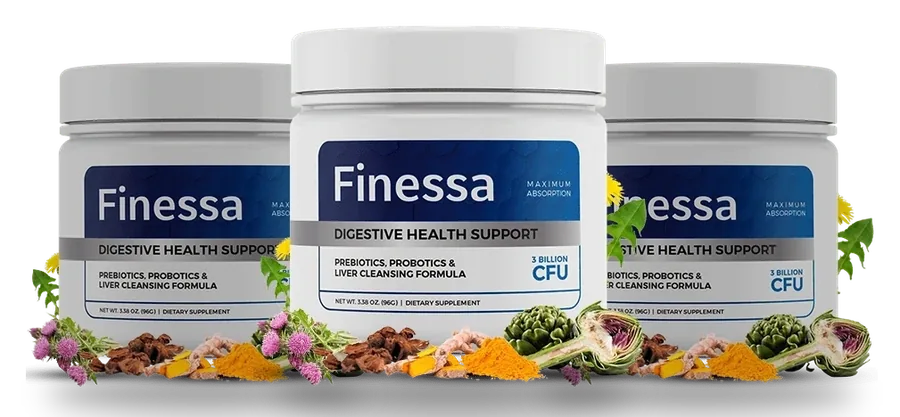
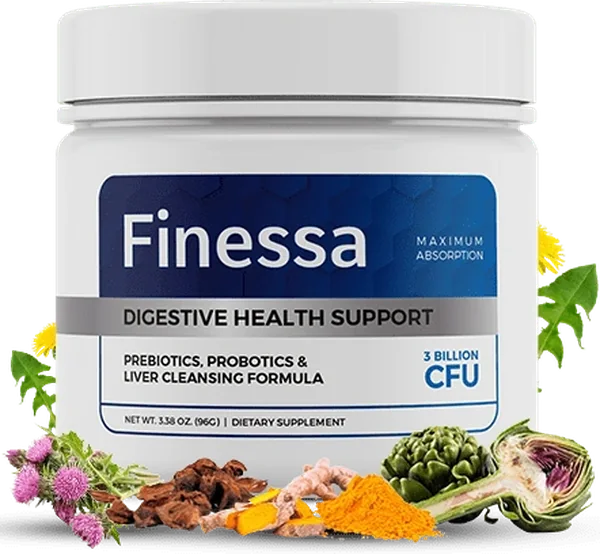
The ingredient list can still blur it. Some supplements hold fiber, some hold probiotics, and some hold herbs that act as laxatives. The label tells you which. The tub front says "Digestive Health Support", which is a supplement phrase, but one of its herbs works as a stimulant laxative.
This guide sorts out the laxative types and shows where a powder like Finessa sits among them. It is general information, not a diagnosis.
Laxative types02
What are the main types of laxatives?
There are five common kinds: fiber supplements, osmotic agents, stool softeners, lubricants and stimulants. NIDDK lists all five (NIDDK, Constipation treatment).
They work in different ways, and they carry different risks. Fiber and osmotic types are usually tried first. Stimulants are the strongest.
| Type | How it works | Examples | Main caution |
|---|---|---|---|
| Bulk (fiber) | Adds bulk and holds water in stool | Psyllium, methylcellulose | Needs fluids; add gradually |
| Osmotic | Draws water into the bowel | Milk of Magnesia, Miralax | Cramps, loose stool |
| Stool softener | Lets water mix into hard stool | Docusate | Mild effect |
| Lubricant | Coats stool so it slides | Mineral oil | Not for long use |
| Stimulant | Makes the bowel muscle squeeze | Dulcolax, Correctol; herbs such as cascara and senna | Use only when severe or other steps failed |
NIDDK says to use stimulants only if constipation is severe or other treatments have not worked (NIDDK, Constipation treatment). First steps are fiber, fluids and movement.
Stimulant vs fiber03
What is the difference between a stimulant laxative and fiber?
Fiber adds bulk and works with the gut's own rhythm. A stimulant laxative forces the bowel muscle to squeeze.
That is why fiber is the gentle first step. NIDDK puts adult fiber needs at 22 to 34 grams a day, with plenty of fluids, added a little at a time (NIDDK, Constipation treatment). Whole foods get most people toward that goal.
A stimulant acts faster and harder. It also pulls water and salts out with the stool. Used for long periods, a strong stimulant can lead to dangerously low potassium and sodium (MSK, Cascara (About Herbs)).
NIDDK adds that people who have used laxatives for a long time and cannot go without them should talk to a doctor about stopping slowly (NIDDK, Constipation treatment).
Cascara sagrada04
Where does cascara sagrada sit among laxatives?
Cascara sagrada is a stimulant laxative herb. It comes from the bark of a buckthorn tree.
In 2002 the FDA ruled that cascara in over-the-counter laxative drug products is not generally recognized as safe and effective, because no safety data were submitted (FDA 2002 final rule, cascara sagrada and aloe (Federal Register)). That rule covers laxative drugs. It does not say a supplement ingredient is banned, and we do not claim it is.
Memorial Sloan Kettering calls cascara a strong laxative, warns about low potassium and sodium with long use, and notes possible liver harm (MSK, Cascara (About Herbs)). A health encyclopedia entry sets a usual dose of 300 mg and no more than 6 days, and says it is not for pregnancy or children (University of Rochester Medical Center, Cascara Sagrada (Health Encyclopedia)).
The sales page for Finessa leans on that entry as its "University of Rochester" source. It is an encyclopedia page, not a study. Read more on cascara sagrada in Finessa.
Cascara vs senna05
How does cascara sagrada compare with senna?
Both are plant stimulant laxatives. Cascara comes from a buckthorn bark, and senna comes from the pods and leaves of the senna plant.
Both belong to the same broad group of plant stimulants. Neither is a gentle daily tonic. Both can cause cramps and loose stool, and both are meant for short use.
Cascara sagrada
Bark of a buckthorn tree. Removed from OTC laxative drugs in 2002 for lack of safety data (FDA 2002 final rule, cascara sagrada and aloe (Federal Register)). In Finessa, third of five Gut Health lines.
Senna
Pods and leaves of the senna plant. Still sold in OTC laxatives. It is not listed on the Finessa panel.
The point is not that one is safe and the other is not. The point is that a plant does not become gentle because it is natural. The NIH reminds readers that natural does not always mean safe (NIH ODS, Dietary Supplements: What You Need To Know).
Finessa: from $39 a bottle50 scoops a tub · 1, 3 or 6 bottles · free US shipping on 6 · 180-day guarantee
See packsFinessa06
Is Finessa a laxative or a supplement?
Finessa is a powder dietary supplement, not a laxative drug. It also holds cascara sagrada extract 10:1, a stimulant-laxative herb.
The Gut Health blend is 755 mg, and cascara is third of five lines. Lines are listed by weight, so cascara weighs at most 755 divided by 3, about 251 mg (21 CFR 101.36 (proprietary blends)). That is our arithmetic from the label order, not a lab test. The real amount could be much lower.
The same blend lists cinnamon, ginger, licorice extract and fructooligosaccharides, a prebiotic fiber that weighs at most about 151 mg. A scoop holds far less fiber than the 22 to 34 grams a day NIDDK describes.
| Question | Laxative medicine | Fiber or probiotic | Finessa powder |
|---|---|---|---|
| What it is | A prescription or over-the-counter laxative drug, such as senna or bisacodyl | A fiber or probiotic supplement | Finessa: a dietary supplement powder with a laxative herb, fiber, probiotics and plant extracts |
| FDA status | Reviewed as a drug, with dose and warnings on the box | Supplements are not approved before sale | Supplements are not approved before sale; the FDA has not approved cascara as an over-the-counter laxative ingredient |
| Active ingredient | One named drug at a printed dose | A named fiber or strain at a printed dose | Four blends and a strain; single amounts not printed |
| Trial evidence | Trials of the drug itself | Trials of the fiber or strain, strain by strain | No trial of the product |
| Best use | Short-term relief of occasional constipation | Daily fiber or microbiome support | Marketed for digestive and liver support |
No trial has tested Finessa, so nobody can say how it compares with a laxative in practice. The sales page line "no known side effects" does not fit a product with a stimulant herb.
Gut balance07
Is a supplement with a laxative herb a gut-balance tool?
No. A laxative herb moves stool. It does not balance bacteria or restore anything.
The sales page promises "gut balance" in its line "support your liver, colon health, gut balance and smooth digestion". No study of Finessa backs that. Probiotic effects are strain-specific, and a 14-trial review found about 1.3 more bowel movements a week, not a universal gain (Dimidi 2014, probiotics and functional constipation meta-analysis).
If a powder gives you looser stool, that may be the herb working as a laxative, not a sign of balance. Keep that in mind before you judge any product by how it moves your bowels.
When to get help08
When should you see a doctor instead of reaching for a laxative or supplement?
See a doctor if constipation lasts, keeps returning or comes with warning signs. A product is not the next step.
NIDDK says to get help right away for blood in the stool, constant belly pain, vomiting, fever, inability to pass gas or weight loss you did not plan (NIDDK, Constipation symptoms and causes). Constipation can also come from medicines, thyroid problems, diabetes and other conditions, so the cause matters.
- Ask first if you take water pills, heart medicine, blood thinners or diabetes drugs (FDA, Mixing medications and supplements).
- Do not use stimulant laxatives or cascara in pregnancy or for children.
- Keep taking prescribed medicine. Do not stop or cut a dose because you started a supplement.
- Long use of laxatives needs a doctor's plan.
More on habits that help is on digestive habits. Side effects are listed on the side effects page, and a side-by-side table is on comparisons.
FAQ09
Laxatives vs supplements questions
Does a gut powder with cascara count as a laxative?
Finessa is sold as a dietary supplement powder, not a laxative drug. It does list cascara sagrada extract, a stimulant-laxative herb, so it can act that way. Ask a doctor first if you take heart medicine or water pills.
What is the difference between a stimulant laxative and fiber?
Fiber adds bulk and works gently with the gut, while a stimulant forces the bowel muscle to squeeze. NIDDK says to try fiber, fluids and movement first, and to use stimulants only when constipation is severe (NIDDK, Constipation treatment).
Is cascara sagrada the same as senna?
No, but they are alike. Both are plant stimulant laxatives. Cascara is a buckthorn bark, and senna comes from the pods and leaves of the senna plant. Both are meant for short use, and both can cause cramps.
Did the FDA ban cascara sagrada?
Not as a supplement ingredient. In 2002 the FDA ruled that cascara in over-the-counter laxative drugs is not generally recognized as safe and effective, since no safety data were sent in (FDA 2002 final rule, cascara sagrada and aloe (Federal Register)).
Can you take a laxative and a gut supplement together?
Ask your doctor or pharmacist first. Two products with laxative action can add up, and long use can lower potassium and sodium (MSK, Cascara (About Herbs)). Check every label for stimulant herbs.
Are natural laxatives safer than drugs?
Not by default. Natural does not always mean safe, and risk rises with high doses or several products at once (NIH ODS, Dietary Supplements: What You Need To Know). Plant stimulants such as cascara have the same cautions as stimulant drugs.
Does Finessa contain caffeine or other stimulants?
The panel lists no caffeine. It does list cascara sagrada, a stimulant of a different kind: a laxative herb that acts on the bowel. So "stimulant free" is true for caffeine and not true for the gut.
Who wrote this10
Written and reviewed by
Pages built from the label, the sales page and linked NIH, FDA, CDC, FTC and peer-reviewed sources.
Last updated . Read our editorial standards and how we check reviews. This website is run by Gofinessa, a U.S. stocking partner for Finessa, not by the manufacturer. We earn money when you buy through our order links.
Keep reading
More about Finessa

U.S. stocking partner for Finessa
Ready to try Finessa?
Check the label against your medicines, then pick a pack. Six bottles ship free in the US and cost the least per bottle, and the guarantee runs 180 days.
- Secure checkout
- 180-day guarantee
- Ships from the U.S.